Catch Me If You Can: Inside the Cat-and-Mouse Game Between Nudify AI and the Detectors Hunting It
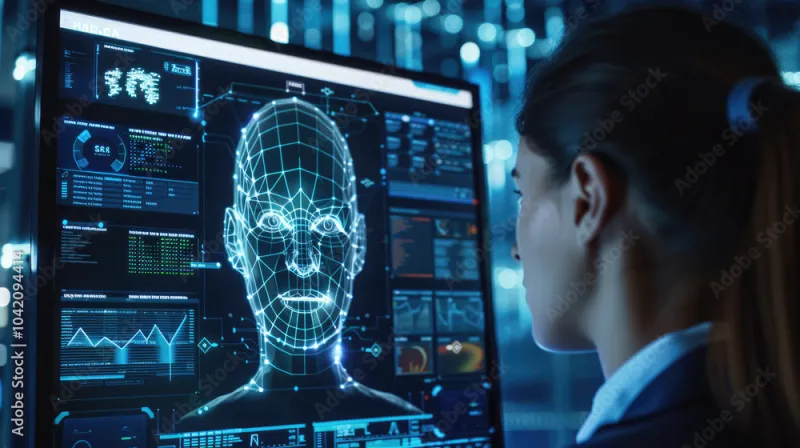
Photo: computer screen facial recognition AI detection technology dark, via as1.ftcdn.net
There's a weird symmetry to the current moment in AI imagery. On one side, tools like the ones we cover on this site keep getting better at transforming clothed photos into convincing fakes. On the other, a whole industry has sprung up promising to detect exactly that. It's an arms race, and like most arms races, the weapons on both sides get more expensive while the people caught in the middle — regular folks with phones and Instagram accounts — mostly just want to know if that image circulating in a group chat is real.
How Detection Actually Works
Most synthetic-image detectors rely on one of two approaches. The first looks for artifacts: weird skin textures, inconsistent lighting, telltale blending around edges where a model did its work. The second trains classifiers on thousands of known fakes until the system learns the statistical fingerprint of generated imagery — the digital equivalent of recognizing a counterfeit bill by feel.
The problem is that nudify-style tools don't generate a whole image from scratch. They modify an existing photo, which preserves the camera's natural metadata, sensor noise, and lighting patterns. That makes them harder to flag than a fully synthetic deepfake, because so much of the image is legitimately real. Detection services like Hive Moderation, Reality Defender, Sensity AI, and Intel's discontinued-but-influential FakeCatcher have all published accuracy claims in the 90%+ range — but those numbers come from lab conditions and benchmark datasets, not from a compressed, screenshot-of-a-screenshot image posted to a Discord server.
The Accuracy Problem Nobody Puts in the Pitch Deck
Independent research tells a less flattering story. Studies out of universities testing commercial detectors against lightly-manipulated or re-compressed images routinely report accuracy dropping into the 60-80% range — sometimes worse. Compression is the killer: when an image gets resized and re-saved by a messaging app, the subtle artifacts detectors depend on get smeared away. Meanwhile, the generative side keeps adapting. Every time a detector catches a pattern, the next model update trains around it.
The result is a rolling stalemate. Detectors are good at catching lazy fakes and bad at catching careful ones, which is exactly backwards from what victims need.
What This Means If You Post Photos Online
For the average American scrolling through TikTok between meetings, the practical takeaway is this: assume manipulation is technically possible, and know what to look for. The arms race isn't going to be won by software alone — at least not in the near term — so a baseline of personal literacy matters more than any single app.
A Practical Field Guide: Checking If an Image Was Manipulated
If a photo of you (or someone you know) looks off, work through this checklist before panicking:
- Zoom in hard on skin and edges. Nudify tools often leave unnatural smoothness, odd texture transitions, or a slightly melted look around clothing lines, jewelry, and body contours.
- Check lighting consistency. Does the illumination on the manipulated region match the rest of the photo? Shadows that fall the wrong direction are a classic tell.
- Compare against the original. If you have the authentic photo, side-by-side comparison at full resolution will usually expose proportion and detail mismatches.
- Run a reverse image search. Google Lens or TinEye can surface the original and any mutated versions floating around.
- Try a detector — with skepticism. Hive's free AI-generated content detector and tools like AI or Not can give you a signal, but treat a "clean" result as inconclusive, not proof.
- Check provenance. Increasingly, platforms are adopting C2PA content credentials — a cryptographic watermark showing an image's editing history. Adobe and Leica cameras already support it. An image with intact credentials is far more trustworthy than one without.
If You Find a Fake of Yourself
Document everything first: screenshots, URLs, timestamps. Then report it to the platform — every major US platform now has synthetic and non-consensual intimate imagery policies, and the Take It Down Act signed in 2025 requires them to remove such content within 48 hours of a verified report. StopNCII.org lets adults create hashes of images so platforms can block them without you uploading the file anywhere. And if the image came from a nudify service, civil litigation is increasingly viable — the first lawsuits against these platforms have already set precedents.
Where the Race Goes Next
The likely endgame isn't a perfect detector but a layered system: provenance credentials baked into cameras, platform-level detection at upload, and legal exposure that makes nudify operators think twice. Detection will keep improving, and so will generation — that's the nature of the game. But the gap between the two is where real harm happens to real people, and closing it will take more than clever math. It'll take platforms, lawmakers, and users all doing their part instead of assuming someone else's tool will catch it.