The Selfie Problem: What Moderators See When the Victim Is the Customer
Photo: Vyacheslav Argenberg, CC BY 4.0, via Wikimedia Commons
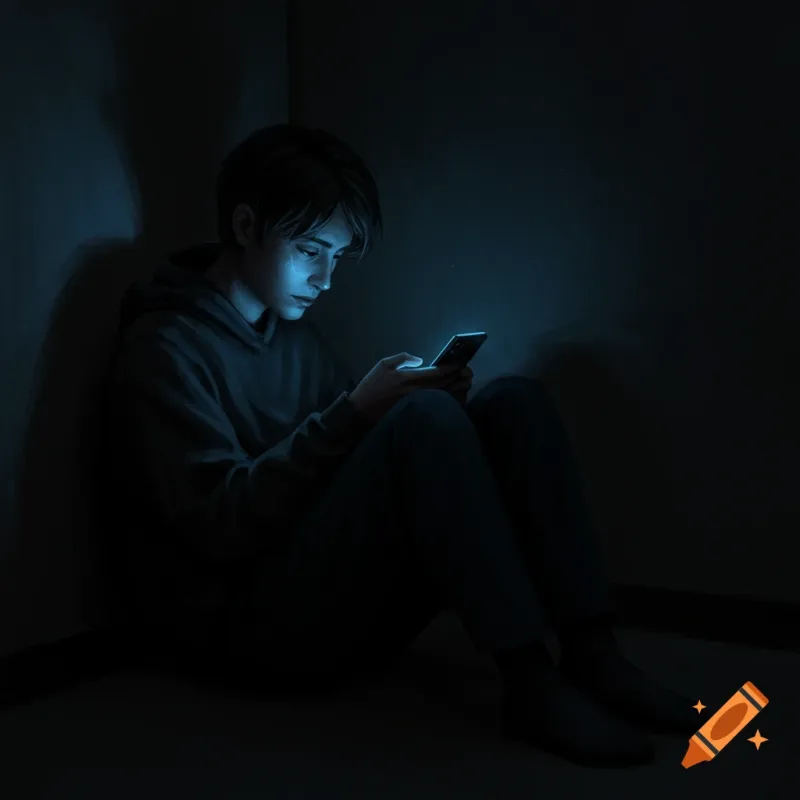
Most requests that hit an AI image platform's queue are forgettable. Uploaded photo, short prompt, done. But every so often, a moderator pauses — not because of what's in the image, but because of who's in it.
It's the requester's own face staring back at them.
Ask around in the content moderation world and a pattern emerges that rarely makes headlines: a nontrivial slice of nudify-style submissions involve people processing photos of themselves. Some are curious. Some are kink-adjacent and entirely their own business. But moderators and the counselors who consult with platforms say a third group stands out — submissions that read less like desire and more like distress.
Reading a Text Box Like a Cry for Help
The signals are usually small. Prompts that reference punishment, humiliation, or 'deserving it.' Submissions that arrive in the middle of the night, repeatedly, with escalating language. Phrases that suggest someone else is making the request: 'she has to send this by morning' typed into a field about one's own photo. Occasionally, outright statements — 'I want to see what everyone says I look like' — that hint at body dysmorphia or an eating disorder rather than arousal.
A veteran moderator I'll call Dana (she asked that her employer not be named) described the shift in her job over three years. 'At first you're looking for the obvious stuff — minors, non-consent, celebrities. Then you start noticing the requests that feel sad. People doing this to their own photos in ways that don't read as fun. That's a different problem, and nobody trained us for it.'
Crisis counselors aren't surprised. The National Eating Disorders Association has long noted that body-image distress and compulsive self-scrutiny travel together, and a tool that produces a 'perfect' nude version of your own body is, functionally, a mirror with the flaws amplified. For someone in the grip of dysmorphia, the output can become evidence for the prosecution — proof of every perceived inadequacy.
There's a darker variant, too: coercion under duress. Abusers sometimes order partners to generate and send such images as a control mechanism. When the person in the photo is also the one who clicked the button, the consent screen tells you nothing.
Why 'No' Isn't a Complete Answer
The obvious policy — block self-submissions — sounds clean until you sit with it. Plenty of adults have legitimate, private reasons to edit their own image. A blanket refusal just pushes the distressed users toward platforms with no safeguards at all.
Some in the field argue for a middle path: triage. Flag prompts that match known distress patterns the way spam filters flag phishing. Route those to a human, not a model. And where the signals are strong enough, respond with something other than silence — a brief, non-judgmental note with the 988 Suicide & Crisis Lifeline number, or a referral to RAINN or the NEDA helpline.
'It feels awkward,' Dana admits. 'You're a porn-adjacent image site sending someone a crisis line. But I've had three conversations where the person replied. One said nobody else had noticed.'
The Duty-of-Care Question
Legally, US platforms are on thin, mostly unmarked ice. Section 230 shields services from liability over user content, and no statute currently obligates an image tool to intervene when a submission suggests self-harm. Ethically, though, the calculus is different. A platform that profitably processes intimate imagery is, at minimum, positioned to see what nobody else does — often literally the only entity watching when someone types something alarming into a text box at 3 a.m.
That doesn't mean turning every nudify service into a therapy provider. It means accepting that moderation isn't just a gatekeeping function; it's a listening function. The companies building these tools made a choice to exist. The follow-up choice — whether to notice the person behind the prompt — is still open.
The prompt that got away, in the end, isn't the one that slipped past the filters. It's the one that read perfectly fine and wasn't.